Thich Nhat Hanh
is one of the most fascinating and compelling people alive - a real
living spiritual treasure. I first came upon his work when I was a very
young man, and I was delighted by the simplicty, clarity and lack of
pretension in his message. I wanted to find out more about
Buddhism, and he was the first writer to really bring it alive for me. It is because of
Thich Nhat Hanh that I have spent the last 20 years exploring
Buddhism and exploring
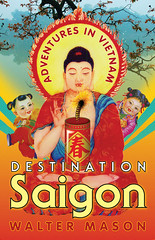
Vietnam. It is no wonder, then, that my book
Destination Saigon carries a thank-you note to him in the acknowledgements.
As well as being a
meditation master and the second most famous
Buddhist monk in
the world (the Dalai Lama beats him), he is also a scholar and
linguist, with a great love for literature and a real gift for
expression. He has been a prolfic writer over the years, so I thought I
would humbly present my own list of his books that have helped and
inspired me over the years:
 Savor
Savor -
This is his newest book, and is co-authored with Dr. Lilian Cheung. It
is a fascinating exercise - a kind combination Buddhist manual and diet
book.
Thich Nhat Hanh has
always talked a lot about food in his writings: the need to eat
mindfully, the need to be thankful for our meals, how to eat ethically
etc. So I guess devoting a whole book to it is a natural progression.
Interestingly, this is also the book that finally got him noticed by
Oprah - so he at last carries the imprimatur of the queen of popular
culture!
 The Energy of Prayer
- This little book is probably the one I turn to most. My copy is
battered and dog-eared, filled with highlighting and comments. I have
used it a lot in my meditation teaching, because I find it uses language
that is quite familiar to Western, non-Buddhist minds. Master Nhat Hanh
has been interested in the meeting of Eastern and Western
spiritualities since he was a young man, and this book is the best
melding of those traditions. Its final section is a series of prayers
and meditations that would be helpful to anyone's spiritual life.
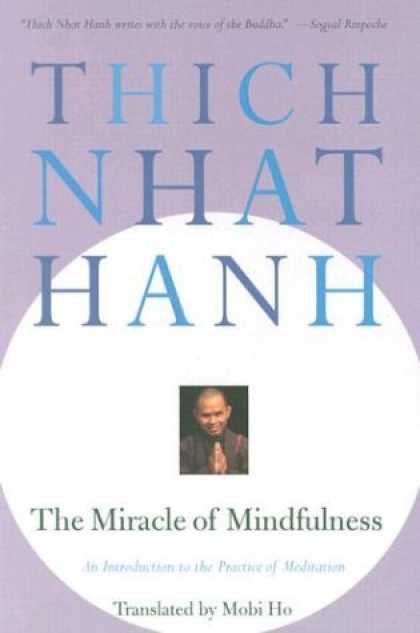 The Miracle of Mindfulness
 - Probably his best-known book,
The Miracle of Mindfulness was
something of a Bible for me in the 90s. I read it over and over as I
traveled through Vietnam, Cambodia and Thailand, and my filthy copy was
perused at some of the most beautiful and amazing locations! It is a
beautifully written and belletristic exploration of meditation and
mindfulness, and I promise it will be a constant inspiration.
 Master Tang Hoi
 - One for the history buffs.
Master Tang Hoi
was the first Zen teacher in Vietnam, and this is the most intriguing
book about him and his teachings. It is essential reading for anyone
interested in Vietnamese history and culture, and for Zen enthusiasts it
represents a meditation teaching that pre-dates
Bodhidharma by 300 years!
 Joyfully Together
- If you are interested in building community and making the world a
nicer place to be, this is a really wonderful place to start. It is one
of Thich Nhat Hanh's more obscure titles, but I have found it to be
tremendously useful and inspiring, and have drawn on its wisdom and
advice many times. Master Nhat Hanh has himself established a global
community of gigantic proportions, so why not learn from a master?