Showing posts with label Buddhism. Show all posts

Saturday, March 31, 2018

Walter Mason will talk on The Zen of Jane at the Jane Austen Society of Australia in Sydney, Saturday June 16, 2018


“Zen of Jane” talk at Jane Austen Society of Australia  - Sydney  – 16 June, 2018 

Sydney meetings are held at the Uniting Church Hall, 7 Lord Street, Roseville NSW

They start at 2pm, and it's a good idea to get there a little early because they can fill up.

“The Zen of Jane: Buddhist Lessons from the Books of Jane Austen” - Walter Mason

A novel and enlightening look at Jane Austen as Zen master. How do we look at literature through new filters, and what does a nineteenth century writer who probably never thought about Buddhism have to teach us about matters of mindfulness? Walter Mason, author and spiritual tourist, looks at how far Buddhist thought had entered Austen’s era and how reading her might prove thoughtful lessons in wisdom, quietness and loving kindness. 
 
When: Sat June 16 2:00 PM - 4:00 PM
 
My talk only goes for about an hour, but there are other items on the program, and a delicious afternoon tea. 
 
 
Non-members are always welcome!!!

Wednesday, July 12, 2017

The Mindful Writer on again at NSW Writers' Centre in 2017

My course on Mindful Writing is always popular, and it's on again this year for the first time at the NSW Writers' Centre.

Places are still available, but it would act pretty quickly, because it tends to book out.

It is an amazing time of quietness, reflection and creative growth, over the course of four Tuesday evenings in the beautiful and atmospheric setting of the NSW Writers' Centre in Callan Park.

Full details and online booking.

Hope to see you there.


Wednesday, February 17, 2016

Tinh Xa Trung Tam, Binh Thanh District, Ho Chi Minh City


Tinh Xa Trung Tam has a special place in my heart because it is the first temple in Vietnam that I ever had any real connection with. In the mid-90s I was a student of a monk in Australia who was a part of the order, and so I visited Vietnam with the special intention of studying more here and learning about this distinctive form of Vietnamese Buddhism.


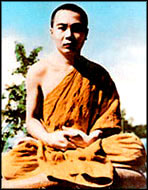
Master Minh Dang Quang

Tinh Xa Trung Tam is one of the centres of worship for the Tang Gia Khat Si, an indigenous Buddhist order founded by Master Minh Dang Quang. There is an excellent Wikipedia entry for this temple which explains its history and a little about the Order and its founder (I would actually love to hear from whoever wrote it) which you should read.

I have spent many days in this temple and its surrounds, though these days when I go back to Vietnam I probably only visit once or twice to say a prayer and soak in some of the memories of my youth.

I am still quite fascinated by the Order's founder, a Mekong Delta monk called Minh Dang Quang who attempted to unify the Theravada and Mahayana schools of Buddhism and re-write the scriptures in colloquial Vietnamese. As at every Tinh Xa (the Vietnamese version of "Vihara" which is what the Tang Gia Khat Si temples are called, as opposed to the Mahayana temples which are called Chua in Vietnamese), there is a shrine to the Master, and this one also contains some of his relics.


Shrine to Master Minh Dang Quang, his relics in cabinet below

On a weekday afternoon there is rarely anyone inside the main shrine, and it is a great place to sit quietly and meditate, or to do a round or two of quiet recitation of the Buddha's name.

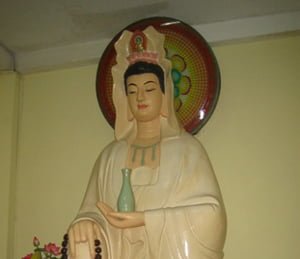
Outside there is a famous, and enormous, statue of Kuan Yin, the Bodhisattva of Mercy (Quan The Am in Vietnamese). It is a very popular object of worship, and throughout the day people come into the monastery grounds to make their own prayers at its base.


Statue of Quan The Am, Bodhisattva of mercy

The temple was built in the 60s, and visiting recently with an architect I was informed that it was a classic piece of American-era architecture, especially in its liberal use of pebble-crete. The main hall is built in the octagonal shape of all Tinh Xas, symbolising the Noble Eightfold Path of the Buddha. Over the years the surrounding buildings have been demolished and rebuilt, and I fear that the same fate awaits the main hall, which would be a shame.

Tinh Xa Trung Tam in Binh Thanh claims to be the main temple of the order, but it's worth mentioning that the order did break up into different sects in the 60s and there are a couple of other Tinh Xas around that claim to be Trung Tam (The Central). 

Just outside the main gates of the temple is a little bookshop, and a small gift stall next to it. The bookshop is run by the loveliest man, though sadly there are no books in English. If you have any Buddhist friends in Vietnam, though, or plan to make some, this is a great place to buy gifts. Publishing in Vietnam is vibrant, and books are beautifully designed and cheap. I always buy a bag-full and manage to distribute them easily.

You can find the temple at:

7 Nguyễn Trung Trực Street, Bình Thạnh District, Ho Chi Minh City.

It is about a 25 minute taxi ride from downtown Saigon (outside of peak hours) and is well worth a visit.
It is hidden down several lanes, so be prepared for your driver to stop and ask for directions along the way.

 In October/November this year I am once again leading a tour of Vietnam, from Hanoi all the way down to the Mekong Delta. This will be a fantastic journey, and I'd love to have you along.

Thursday, October 23, 2014

Always in threes: the significance of 3 in Buddhism

"Different schools of Buddhism all have different devotional practices to the Buddha, although all  Buddhists make symbolic offerings to the Three Jewels, that is, the Buddha (teacher), Dharma (teachings), and Sangha (community)."

Andi Young "The Sacred Art of Bowing"


Recently I was teaching a course on Vietnamese history, and naturally enough Buddhism was a part of the discussion. While discussing a ritual, one of the students asked me: "Why is everything always done in threes in Buddhism?"
I realised then that I had a lot to explain, and I thought I would do so on this blog.


When one bows at a Buddhist shrine, one always makes three prostrations. At the same time one offers three sticks of incense. When you make a ceremonial procession around a temple or tomb you do so three times.

3 sticks of incense offered at a buddhist shrine in Binh Dinh, Vietnam


This number is not arbitrary. Buddhists instantly understand that the number 3 represents the Three Jewels (the Triratna) that make up Buddhism. These are:

Sakyamuni Buddha


1. The Buddha: The person of the historical Buddha Sakyamuni.

2. The Dharma: The body of teachings that describe Buddhist doctrine and belief.

3. The Sangha: The group of people who follow the Buddha and his teachings. This was traditionally interpreted as the ordained celibate clergy who serve the Buddha exclusively, but most modern Buddhists extend the meaning to incorporate the communities of lay-people who follow the Buddhist path.

And so each time we bow, and each time we place a a stick of incense in the burner, we are recalling one of these "Jewels," these essential elements of the Buddhism. 

Monday, December 23, 2013

Vinh Nghiem Temple, Cabramatta

Vinh Nghiem Temple is one of the Buddhist temples most easily accessible via public transport in Cabramatta.


Now anyone who knows Vinh Nghiem Temple in Vietnam might feel a little let down by the distinctly more humble aspect of Sydney's branch.


Vinh Nghiem in Ho Chi Minh City is Vietnam's largest and most vibrant Buddhist institution, a constant on any tourist itinerary. In Sydney it is a humble fibro cottage with an add-on out the back.


But rest assured it is the real McCoy - the Abbot, Ven. Thich Vien Chon, hails from Vinh Nghiem TPHCM, and was in his day a famous teacher at the Vinh Nghiem Buddhist High School (now closed).
We had a lovely time making our own fresh spring rolls (goi cuon) under the tutelage of Vinh Nghiem Temple's resident nuns.


Details:

Vinh Nghiem Temple
177 John Street, CABRAMATTA, NSW 2166

Open every day - all welcome - enter through the carport on the left side of the house.

Monday, January 7, 2013

Monday Blogcrawl - Buddhism

Some Buddhist stuff from around the www this past week:


Stories of the Buddha in art


Wednesday, December 19, 2012

5 Interesting Books by Thich Nhat Hanh

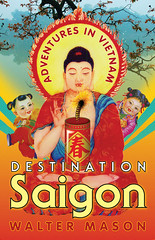
Thich Nhat Hanh is one of the most fascinating and compelling people alive - a real living spiritual treasure. I first came upon his work when I was a very young man, and I was delighted by the simplicty, clarity and lack of pretension in his message. I wanted to find out more about Buddhism, and he was the first writer to really bring it alive for me. It is because of Thich Nhat Hanh that I have spent the last 20 years exploring Buddhism and exploring Vietnam. It is no wonder, then, that my book Destination Saigon carries a thank-you note to him in the acknowledgements.
As well as being a meditation master and the second most famous Buddhist monk in the world (the Dalai Lama beats him), he is also a scholar and linguist, with a great love for literature and a real gift for expression. He has been a prolfic writer over the years, so I thought I would humbly present my own list of his books that have helped and inspired me over the years:


Savor - This is his newest book, and is co-authored with Dr. Lilian Cheung. It is a fascinating exercise - a kind combination Buddhist manual and diet book. Thich Nhat Hanh has always talked a lot about food in his writings: the need to eat mindfully, the need to be thankful for our meals, how to eat ethically etc. So I guess devoting a whole book to it is a natural progression. Interestingly, this is also the book that finally got him noticed by Oprah - so he at last carries the imprimatur of the queen of popular culture!


The Energy of Prayer - This little book is probably the one I turn to most. My copy is battered and dog-eared, filled with highlighting and comments. I have used it a lot in my meditation teaching, because I find it uses language that is quite familiar to Western, non-Buddhist minds. Master Nhat Hanh has been interested in the meeting of Eastern and Western spiritualities since he was a young man, and this book is the best melding of those traditions. Its final section is a series of prayers and meditations that would be helpful to anyone's spiritual life.


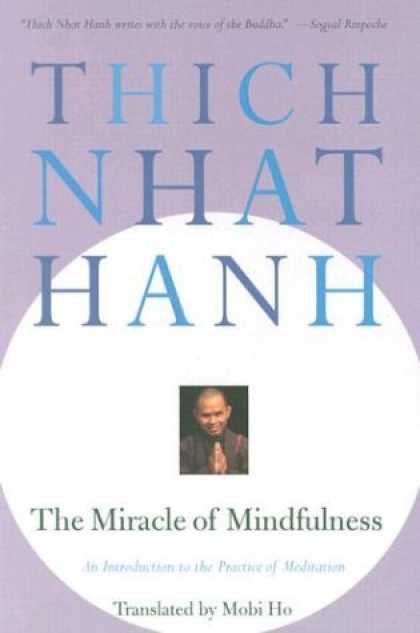
The Miracle of Mindfulness - Probably his best-known book, The Miracle of Mindfulness was something of a Bible for me in the 90s. I read it over and over as I traveled through Vietnam, Cambodia and Thailand, and my filthy copy was perused at some of the most beautiful and amazing locations! It is a beautifully written and belletristic exploration of meditation and mindfulness, and I promise it will be a constant inspiration.


Master Tang Hoi - One for the history buffs. Master Tang Hoi was the first Zen teacher in Vietnam, and this is the most intriguing book about him and his teachings. It is essential reading for anyone interested in Vietnamese history and culture, and for Zen enthusiasts it represents a meditation teaching that pre-dates Bodhidharma by 300 years!


Joyfully Together - If you are interested in building community and making the world a nicer place to be, this is a really wonderful place to start. It is one of Thich Nhat Hanh's more obscure titles, but I have found it to be tremendously useful and inspiring, and have drawn on its wisdom and advice many times. Master Nhat Hanh has himself established a global community of gigantic proportions, so why not learn from a master?

Christian-Zen, Zen-Christian

Pic from Randy Dellosa


Just briefly, I wanted to alert you to this fascinating podcast from Unity FM's World Spirituality podcast on Christian-Zen practice.


Zen Buddhism is the form that Vietnamese Master Thich Nhat Hanh has exported to the world in its uniquely Vietnamese guise. And, as you will hear on this podcast, there has been a great deal of merging Zen and Christian practice in the West.
Such interfaith activity is almost unknown in Vietnam, however, where Catholics and Buddhists remain quite separate, and each side views any attempt to incorporate the other with abhorrence. I would actually be really interested in taking these ideas to Vietnam, but I fear that in the present political climate it would be impossible.
Anyway, please listen to this quite moving podcast and let me know what you think. Would particularly like to hear from people who are engaged in both traditions.

Thursday, November 22, 2012

Minh Dang Quang


One of the most mysterious and fascinating figures in Vietnamese Buddhist history is the Patriarch Minh Dang Quang.


Though he was an enormously influential character whose legacy still thrives today in Vietnam, there is almost nothing about him in English. If there is something substantial I'd be most grateful if anyone could alert me to it. I have discovered an excellent scholarly article by Mark W. Mcleod called 'The Way of the Mendicants' which provides some excellent insights into life at Tinh Xa Trung Tam, the central monastic institution for the sect.


Minh Dang Quang was the founder of the Tang Gia Khat Si (The Mendicant Buddhist Order) - this is one of the largest Buddhist sects in Vietnam, and the Khat Si temples (known as Tinh Xa) are to be found all over Southern Vietnam (including many in Ho Chi Minh City). He was half Viet half Khmer, from Vinh Long province, and his bi-racial upbringing exposed him to both Mahayana and Theravada Buddhism. At a young age he was driven by the idea of combining the two traditions in Vietnam, the only country that could boast of sizeable numbers in each camp.

So he established the Mendicant Order, and it quickly gained in popularity, particularly in the villages and towns of the Mekong Delta. Minh Dang Quang was impressed by the strictness of the Theravadin monastic orders, and so created similar rules for his own monastics - banning the consumption of food after midday, banning the use of shoes or sandals, not allowing monks to cook or prepare their own food, encouraging them to go on begging rounds in the morning etc. He also added the additional burden of vegetarianism, which is not normally observed by Theravadin monks. He opened up the monastic vocation to women, another tradition also absent in the Theravada.

Adopting the theological structure of Mahayana almost holus bolus, he encouraged both the recitation of Amitabha Buddha's name and the worship of Kwan Yin, both of which are anathema to the Theravadin establishment.

What really popularised his movement however - aside from the great respect the people formed for the monks and nuns willing to observe such hardship - was his translation of the Buddhist sutras from the difficult (and sometimes even nonsensical) sino-vietnamese language into an easily understood and even rhyming form of the common language. The largely uneducated parishioners found it infinitely easier to remember these sutras, and to glean some meaning from them. This, naturally, made him extremely unpopular with the Mahayana Buddhist hierarchy, who accused him of corrupting the Dharma by tampering with the texts they had known since antiquity.

Sometime in the 1950s Minh Dang Quang 'disappeared' and was never seen again. There were rumours that he was assasinated by the anti-Buddhist government forces who saw him as a trouble-maker, or by agents of a rival Buddhist sect who saw his growing movement as a threat to their own power base in the Mekong Delta. His followers, however, refuse to acknowledge his death and still celebrate his 'disappearance' day each year.

An intriguing character with an intriguing story - one day I think I will write a book about him.

Monday, November 5, 2012

Countrytown Temple


This photo was taken at a little temple in Song Be back in 1996. I was taken there on an agonisingly long trip on the back of a motorcycle, but when we arrived the temple was closed and there was no-one around.
Seeing a foreigner poking about, one of the neighbours came out, and someone was sent to fetch the monk, who was nearby.
He came back beaming, a frail, thin and elderly man. He unlocked the temple and showed me around. The whole place was dusty and uncared for, and the nighbours swept the shrine room so that we could bow to the Buddha without blackening our foreheads.
When I came to offer incense at this side shrine, where the statues were all very old and covered in years of grime, I was suddenly overcome with a kind of elation. It was one of those rare moments of transition, of self-discovery, and is impossible to put down in words. For me it was a memory, a feeling, a strange sense of belonging. I had been in this place before.
You could my response mystical, romantic, even hormonal. It may have been a practical emotional response to being accepted as family amongst all of this exotica.
But when I look at this photo it describes for me a change in lifestyle, and the beginning of an obsession.

Friday, August 17, 2012

Monastic Communities


Buddhist monastic communities are still very much alive in Vietnam, though the numbers of young monks have dwindled rapidly from their heyday twenty years ago when Vietnam was desperately poor and entering a monastic institution was seen as a guarantee of a comfortable and predictable life. Now that Vietnam has well and truly entered the consumer age young people are less willing to embrace a life of renunciation, celibacy and physical hardship in exchange for predictable food and quality education. 


The Baby Buddha, Tinh Xa Trung Tam, Ho Chi Minh City


And because the predominant form of Buddhism in Vietnam is Mahayana, there is none of the temporary ordination that you see in neighbouring countries like Cambodia and Laos, which swells the ranks of monks quite deceptively with young men and makes for all those charming pictures of monks that people take back home after their holidays. 


Monk blessing people, Battambang, Cambodia


In the Vietnamese tradition you take the monks’ robes for life, so young men take the decision a good deal more seriously. 


The internet has been abuzz for the past week or so with stories of a gang of Buddhist monks in Korea caught on camera drinking, smoking and gambling. It would be extremely naive to think that such things don’t go on in Vietnam. Of course they do. Drinking is completely verboten, but back in the 90s I knew young monks who consumed beer at parties. When I questioned them about this, they maintained that the ban was on strong forms of liquor like vodka and whiskey. Beer, they maintained, was only a mild intoxicant and so not technically wrong. Absolute nonsense, of course, but it was a common deception. 


In the 80s and 90s I would say that most monks in Vietnam smoked, though I have noticed that in recent years this is increasingly frowned upon, and many of my old monastic companions have given up for the sake of propriety. The disapproval of lay people had simply grown too strong. I can honestly say I have never witnessed monks gambling. I think that gambling is such a real and ever-present social problem in Vietnam, one which regularly destroyed the lives of the people they ministered to, that they were not capable of giving it any kind of saffron-wash. 


One sees now, more and more often, clips of Buddhist monks on Youtube doing inappropriate things, like dancing, staring down women’s blouses or even, in the case of one Thai monk, vouging. Of course, these things are all forbidden by the Vinaya, the enormous code of ethical conduct for monks devised by the Buddha many centuries ago.  This is a fascinating document, going into the detail t hat it does about what monks should or shouldn’t do. The list is exhaustive and seemingly random – most scholars assume it was created in reaction to infringements by monks living in the Buddha’s day, or the complaints of scandalised lay people. 

And so it is that rules exist forbidding monks, for example, to climb trees, or to roll rice up in balls and throw it into their mouths, or to eat with an “mmmph mmmph” sound. So extensive is the list of forbidden activities in the Vinaya that it is almost impossible for any human being to uphold them all, and most monks don’t even try. The Buddha himself knew this, and said that if a monk could abide consistently by every rule established he would be immediately enlightened. Suffice to say that enlightenment among monks is still pretty thin on the ground.

Friday, July 6, 2012

Basic Concepts of Buddhism: The Sangha


The basic act of Buddhist devotion is taking refuge in the Three Jewels: Buddha, Dharma and Sangha.

Monks at Tinh Xa Trung Tam, Saigon


The Buddha is the person of the most enlightened one, the Dharma is the body of the Buddha's teachings - but what is the Sangha?  


Buddha shrine at Vien Giac Temple, Bui Thi Xuan St, Tan Binh district, Ho Chi Minh City.


Sangha is a Sanskrit and Pali word meaning "Assembly" or "Community." Traditionally the Sangha has been interpreted to mean the monastic community of dedicated religious practitioners living together in a community devoted to the Buddha's teachings.

But Vietnamese Buddhist teacher Thich Nhat Hanh has taken the concept further. In his book Joyfully Together: The Art of Building a Harmonious Community, he explains Sangha in this way:

"Any group of people can practice as a Sangha, as a community that is determined to live in harmony and awareness. All we have to do is commit ourselves to going together in the direction of peace, joy, and freedom. Together, we benefit from each other's strengths and learn from each other's weaknesses. A family is a Sangha, the members of a monastic and lay practice centre are a Sangha; even the United Nations is a Sangha! A Sangha is a family, a spiritual family connected by the pactices of mindfulness, concentration, and insight.  The Sangha may be Buddhist, or even non-Buddhist, so long as it is a community that walks the path of liberation together."

These days the Sangha is normally spoken of as "the community that follows the Dharma," thereby incorporating all Buddhists, lay and monastic.


Tuesday, June 12, 2012

Thich Quang Duc


Though these days people in the West view him as a figure of bizarre fascination and even horror, Thich Quang Duc remains a hero to Vietnamese Buddhists, and is even called Thich Quang Duc Bo Tat - the Bodhisattva Thich Quang Duc.


He is the monk famous for burning himself alive in protest at the continued Vietnam-American war, and the image of his burning body sitting upright in the lotus position became a worldwide symbol of the anti-war protest movement.
Though he hailed from Hue, Thich Quang Duc was normally resident at Saigon, at the Quan Am Pagoda in Phu Nhuan District.


This temple is still there, on the re-named Thich Quang Duc street, and upstairs it has a small and rarely visited museum to the Bodhisattva. Normally closed to visitors, it contains various relics of Thich Quang Duc - his pillows, his clothes, his books and other everyday items. The temple also has his most sacred relic, the small charred heart that was left after his body had been consumed by petrol-fuelled flames. This heart will be housed in a large tower being constructed at the top of the temple. It may well be finished by now (I'd love to hear from anyone in Saigon who is aware of its progress), and it is already a striking landmark in that part of the district. At the very top of the tower is a large sculpture of two hands clasped together in prayer. It is really quite beautiful.
Though Thich Quang Duc was the first of the Buddhist martyrs, many were to follow, both monastic and lay people.


For many years a small monmument to Thich Quang Duc stood at the corner of Nguyen Dinh Chieu Street and Cach Mang Thang Tam Street in Saigon, but recently a brand new one has been opened by the City authorities just across the road, as part of a memorial park.

Wednesday, June 6, 2012

States of Rebirth

Today I was wandering through the streets of Cabramatta when I spied, in a big pile on a shelf of free Buddhist literature outside a vegetarian supermarket, this laminated leaflet:


It transported me instantly back to Vietnam, where this particular poster is very commonly encountered, particularly in the guest rooms at temples and on the walls of vegetarian restaurants.
It is a chart of the various states of rebirth we might hope to attain.
Now of course, some of those staes of rebirth are in hell, where the wicked must pay for their torments.
This used to be a decorative motif much beloved of Buddhist temples, though it seems to have become unfashionable in recent years, and many temples have painted over their vivid wall murals depicting the various torments of hell.
I found some intact, however, at the Vietnamese Buddhist temple in Phnom Penh.


And while in Siem Reap I visited the truly ghastly Cambodian Culture Village, where the only thing even mildly amusing was the "Tunnel of Judgement" featuring 3D renderings of the punishments infliced on the evil in the hell realms.
These dioramas were a kind of torture porn, and of all the photos I took this is the ony one I can show safely on a PG rated blog:

Tuesday, March 20, 2012

A Vietnamese Temple in Phnom Penh


There was once a large Vietnamese population in Phnom Penh.
When I first visited in 1996 I heard Vietnamese spoken often on the streets. Restaurant owners, cafe proprietors, market-stall holders - all were frequently Vietnamese. The city boasted several Vietnamese Mahayana temples with resident monks, as did outlying areas.
This has been gradually changing. More and more Vietnamese return home, despite having lived in Cambodia for a generation. The Vietnamese temple close to Olympic Market is the last one I know of in the inner-city area, and that seems to be on its last legs. Of course, no-one knows where it is, and most Tuk-tuk and moto drivers will tell you that there is no Vietnamese Wat in Phnom Penh. The only one they know of is in a fishing village about 15 kilometres outside of the city. I knew it was there somewhere, though, and eventually I went out to the Vietnamese restaurant next to the Mai Linh bus stop that sells tickets to Ho Chi Minh City. The kindly owner affirmed there was a Vietnamese temple nearby, and the waiter drove me there on the back of his bike, having stopped to ask directions several times.


When I visited last year there was still a resident monk, albeit a very grumpy and not particularly outgoing one. But even he has left, leaving the temple more or less deserted. The temple-keeper seems to be an 18 year-old boy, helped by some of the surrounding families and kept company by a shifting cast of ne'er-do-wells that sleep in hammocks in the prayer hall.
It's a shame, because it is a beautiful little place, displaying a unique amalgamation of the two religious styles. The usual wall murals common in Theravadin temples across Southeast Asia are here, but with the addendum of murals depicting Mahayana concepts of hell and the cultivation of merit that one might see at a Chinese or Vietnamese temple.
The main shrine contains the usual Vietnamese mix of Buddhas and Bodhisattvas, but also a Khmer-style image of the Buddha that you would never encounter in Vietnam.


Outside the temple are a number of small shrines, including one devoted to a local Goddess from Ca Mau in Southern Vietnam - I have never encountered her before.


The temple is well worth a visit, though prepare for a struggle to find it. It is actually centrally located - it's just that no-one knows about it.


Ask the driver to take you to Wat S'nyay (Wat Vietnam).
He may not know where it is, in which case ask him to take you to Street #134 and ask directions from there.

Thursday, December 22, 2011

The Dark Wet - Jess Huon


This book of connected short stories takes place in the most seemingly impossible combination of places: the suburbs of Melbourne and the steamy holy city of Varanasi. But Jess Huon somehow manages to make the two places seem like twin cities, filled as they are with the dark heat of longing and the furious frustrations of identities unformed, and passions unresolved.

Jess Huon is a new voice, and judging by this beautifully intense little book I think she is one we will come to know more and more. The twin passions of sex and religion are here in their starkness; the androgynous and sexually confused Australian teenager balanced by the twirling, chanting and genderless devotees of Krishna at a dusty Indian temple. And Isabelle, the heroine of the stories, with her own struggles with gender and identity, is torn between the outlaw freedom of a sexual rebel and the conformist comforts of footy boys and scholastic success. She finds her escape in yoga, in Buddhism and in the not-so-sublimated sexual longing for a guru, taking a brief respite at a Christian ashram in the Indian jungle. It is here that The Leopard Story, by far the masterpiece of the collection, is set. Huon manages to capture with elegant simplicty the perverse ironies of warring religious loyalties, the farce of Asian Christians at odds with Western converts to Eastern religions, each side warring with fierce conviction and contempt for the familiar realities of an unloved home. And sex is still there too, lingering in the shadows like the story's eponymous leopard, in the shape of longing for a dangerous and glamorous young pastor, himself a refugee from Western excess.

Jess Huon's India was, to me, a more intriguing place than her Melbourne. In describing Melbourne the stories have a literary familiarity, an obsession with suburban Australian space that is obsessively charted in Australian fiction. But in India Huon, like her character Isabelle, and like a thousand young Western backpackers, is thrust into the unknown, and in her case the result is luminous. And it is honest - Alex has no great understanding of the place she is in. It serves as an exotic and necessarily removed backdrop to her own psycho-sexual obsession and, for a moment, her physical failings.

And finally, but so importantly , there is religion, a thing rarely encountered in modern Australian fiction. Isabelle is dazzled by a world of temples and smells, of flowers offered and crushed, and of Hindu and Buddhist deities subtly but powerfully different. At times Huon is a travel writer as much as a writer of fiction, and I was thrilled by her ability to describe the places her characters inhabit, or at least drift through:

"Men, in the most beautiful silk saris, dancing, praying, reciting poetry within the temple grounds, faces glowing like the mangoes the women sold outside, along with garlands of flowers."


So many of us have visited India, or long to visit. The Dark Wet is one of the most sophisticated and thoughtful engagements with that country that I have read in a very long time, and Jess Huon's elegant writing is filled with promise. I will be watching for her with interest.


The Dark Wet by Jess Huon is published by Giramondo.

Tuesday, October 18, 2011

Monk in Mis-Matched Robes


Here is a photograph of a young monk in Quy Nhon. The monk's robe is mismatched. If you know anything about Buddhism in Vietnam, his outfit is a bit of an enigma, and I wrote about him in Destination Saigon:

"At this point a very short young novice shuffled past the Abbott’s office. He was wearing the usual brown pyjamas that represent the everyday uniform of monks everywhere in Vietnam. But across his shoulders he’d thrown a saffron robe of the type and colour usually associated with Theravadin monks. He was wearing it in the manner of a shawl or scarf, and seemed quite confident in this sartorially peculiar combination. Thay Quang, the new arrival, nearly choked on his sweet green tea, and called out for the young monk to come back to the office this second. Thay Chau, the Abbott in charge, merely beamed happily at his young charge.

“What on earth do you have on, monk?” Thay Quang demanded. “You look like a Theravadin! You’re not meant to have that on! Take it off right now.”

The young monk, not at all concerned, tossed one of the ends of the robe across his throat and marched off, completely disregarding his senior. Thay Quang’s eyes bugged out, and he turned to the Abbott. “What in God’s name is he wearing that for?”

Thay Chau chuckled and said, “Oh, he’s back from a holiday in Thailand and it’s just a little thing he’s picked up.”

“But a monk just can’t wear whatever he likes! What will the lay people say?”

“Oh, they like it – they say it looks handsome.”

“Handsome!” snorted Thay Quang. “What a disobedient child he is. You really should try to control these young monks more.”

“Oh, no harm done. He’s quite charming, really. It doesn’t matter if he wants to dress his habit up a little.”"
Related Posts with Thumbnails