Matters Queer are popping up again and again in Vietnam lately.
Last year one of the best Queer movies ever to be made in Asia, Hot Boy Noi Loan, was released in Vietnam. Then there was a recent gay pride parade in Hanoi, and then whisperings that the notoriously conservative central government is about to legalise gay marriage.
It comes as a great surprise to many that Vietnam should suddenly become a hotbed of Queer foment. But to me it is no surprise, familiar as I am with the vibrant gay cultures that exist in Ho Chi Minh City and Hanoi (and in other, smaller, cities).
I stumbled upon this very sweet video on Youtube.
I am not at all sure it is real. Some say yes, some say it was staged by film students in order to raise the profile of gay and lesbian issues in Vietnam. I don't really care, because it is a charming piece of ficto-reality, and the actors/participants show incredible bravery. Oh, and balloon boy is an absolute hottie.
Do watch and enjoy:
It's not every day that one's partner is featured in a major documentary series on national television!
Thang Ngo and Joey - both featured in the upcoming documentary
We know Cabramatta now as the exciting, vibrant foodie destination. It wasn’t always like that. Once upon a time, it was more well known for the ‘junkie express’ and as the heroin capital of Australia. SBS explores the amazing transformation in this landmark, 3 part documentary on SBS One, from 8th January 2012.
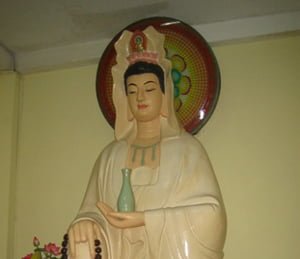
The Vietnamese Goddess Thanh Mau outside the temple dedicated to her in Cabramatta
“Once Upon a Time in Cabramatta is the untold story of how the Vietnamese community overcame the odds and found their place in multicultural Australia. From Prime Minister Fraser’s landmark decision to open Australia’s doors to thousands of refugees at the end of the Vietnam War, this three part series follows the Vietnamese people of Cabramatta as they struggle to find their place in a foreign land. The 80s and 90s see the arrival of street gangs, a heroin epidemic and the first political assassination in Australia’s history. The Vietnamese people are vilified and demonised and it seems Cabramatta represents all that is wrong with Asian immigration. But as the century draws to a close there is a remarkable turnaround and the Vietnamese people finally find their voice – speaking up to claim their rightful place in their adopted home. Cabramatta becomes a community transformed. Australia, a continent changed forever.” SBS publicity.
See the video sneak peek for a taste of what’s to come.
For many years I'd heard of a mythical Vietnamese Mahayana Buddhist temple in the heart of Bangkok, but whenever I visited Thailand my Thai friends had never heard of it and assured me that no such place existed. My Vietnamese friends who had visited it were shaky in their grasp of Bangkok's topography, and couldn't give any useful directions. One day I was wandering around Pantip Plaza and I saw two young monks shopping. Though they were dressed peculiarly (see my description in the video) I knew instantly that they were from the Mahayana school - a rare sight in Thailand. Using my minimal Thai and their even more minimal English I managed to get their address and visited them that day. Lo and behold, I had discovered my long sought for Vietnamese temple. Most Bangkokians, even those living in the Chinatown district, have no idea that Wat U Phai Rat Bamrung on Charoen Krung Rd was established by a Vietnamese monk 300 years ago. They have just glanced inside and assumed it was one of the various Chinese temples that dot this part of Bangkok. The families that make up the temple's devotees were once Vietnamese, but were long ago assimilated into Thai culture. All that remains of their ethnicity is their allegiance to this strange temple. The chanting is done in Vietnamese, but the parishioners (and the Thai monks resident) need to read the words transliterated into the Thai alphabet. I have blogged some photos of the temple in the past. There are two young monks from Vietnam resident, and they are rather unstinting in their continued Vietnamese-ness. They refuse to eat meat and they assume a rather more active role in the community than Thai Buddhists are used to. It is a strange place, and one that I like very much. As soon as I get to Bangkok I always try to visit, and my Thai friends are always fascinated to learn about it. I guess it is a remnant of a much closer relationship that once existed between the two countries.
"captures the colour, smells, everyday life... that is Vietnam in the 21st Century" Sunday Telegraph
"interesting... well written... engrossing" SMH, The Age
"fascinating and entertaining..." Courier Mail
"an entertaining insight..." Herald Sun
"Between the soft chanting of ghosts, the mischievousness of fairies and a hysterical account of a night of karaoke with a group of fishermen this book is a gem." Nova Magazine
"A rare insight into Vietnam's rich history and culture" MiNDFOOD
"hilarious, heartbreaking and fascinating... an absorbing love letter... perfect..." NW
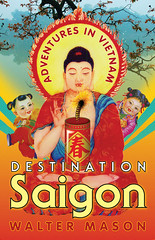
Destination Saigon, by Walter Mason is a funny, touching and truly unique journey through contemporary Vietnam.
Food Feature: Naengmyeon, Korean
-
Addicted to Korean BBQ, obsessed with Korean fried chicken? Can’t get
enough of bibimbap? Noodlies, reckon you shouldn’t forget about this Korean
noodle ...
A pile of books for the New Year!
-
A little squiz at what I plan on reading first thing this year.
From the top:
*Michelle de Kretser on Shirley Hazzard* - Anyone who knows me will know
t...