Sunday, July 8, 2012

Co Dau Dai Chien (Angry Brides)

When we were visiting our favourite DVD shop in Cabramatta recently the owner slipped an extra disc into our bag for free. "You'll love this one," he said. "A brand new movie from Vietnam."
Which is how we discovered Co Dau Dai Chien, a sex-comedy released in 2011 that details the adventures of a rather gormless nouveau riche lothario and the clutch of women to whom he has promised his hand.


Now, don't be expecting any great delicacy of observation in this movie. In terms of sexual politics I dare say it is quite problematic. But in terms of entertainment this is a wonderful, and surprisingly sophisticated film. It represents the most fascinating meeting of cinematic traditions, combining the martial arts aesthetics of Crouching Tiger, Hidden Dragon with the sleek and sexually-charged repartee of the Rock Hudson & Doris Day movies, throwing in a generous dose of camp self-knowingness which at times put me in mind of Will Success Spoil Rock Hunter?
It is also a remarkable evocation of contemporary Saigon, with its yuppie try-hards, its ambitious young career women, and centuries of tradition being fast jettisoned in the face of a growing prosperity. The film's hero is despicable in his treatment of women, but he is also ultimately punished for it in the most intimate and devastating way.
I absolutely loved this film, and simply couldn't stop laughing. The comedy veers from the slapstick to the cerebral, and the performances similarly slide from exquisitely subtle to over-the-top campery. But it is all such tremendous fun, and with such a complicated and even wicked moral, that the variety of experiences seem to be an intentional part of the journey.
Watch it with an open mind and tell me that the end isn't a kind of feminist triumph. Or I could have got it totally wrong.  

Friday, July 6, 2012

Basic Concepts of Buddhism: The Sangha


The basic act of Buddhist devotion is taking refuge in the Three Jewels: Buddha, Dharma and Sangha.

Monks at Tinh Xa Trung Tam, Saigon


The Buddha is the person of the most enlightened one, the Dharma is the body of the Buddha's teachings - but what is the Sangha?  


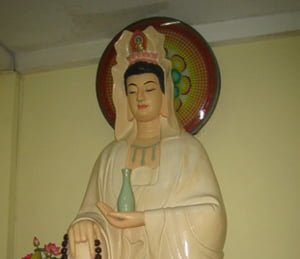
Buddha shrine at Vien Giac Temple, Bui Thi Xuan St, Tan Binh district, Ho Chi Minh City.


Sangha is a Sanskrit and Pali word meaning "Assembly" or "Community." Traditionally the Sangha has been interpreted to mean the monastic community of dedicated religious practitioners living together in a community devoted to the Buddha's teachings.

But Vietnamese Buddhist teacher Thich Nhat Hanh has taken the concept further. In his book Joyfully Together: The Art of Building a Harmonious Community, he explains Sangha in this way:

"Any group of people can practice as a Sangha, as a community that is determined to live in harmony and awareness. All we have to do is commit ourselves to going together in the direction of peace, joy, and freedom. Together, we benefit from each other's strengths and learn from each other's weaknesses. A family is a Sangha, the members of a monastic and lay practice centre are a Sangha; even the United Nations is a Sangha! A Sangha is a family, a spiritual family connected by the pactices of mindfulness, concentration, and insight.  The Sangha may be Buddhist, or even non-Buddhist, so long as it is a community that walks the path of liberation together."

These days the Sangha is normally spoken of as "the community that follows the Dharma," thereby incorporating all Buddhists, lay and monastic.


Thursday, July 5, 2012

Catherine Deneuve


Having once been the face of Chanel No.5, muse of Yves Saint Laurent and partner of photographer DavidBailey, Catherine Deneuve remains one of the most stylish women in the world, and she was, perhaps, at her most stylish when she starred in Indochine RegisWargnier’s 1992 epic about the French colonial period in Vietnam. 


I saw Indochine long before I ever saw Vietnam, and it indelibly coloured my vision of that country. And I still see myself in a vauguely Deneuve-ish light, swanning about in the Vietnamese heat in some gorgeous Vietnam-inspired couture.
When we finally did get to Vietnam in 1994 the shadow of Catherine Deneuve still loomed, particularly in Hanoi. She must have been quite the shopper, because shop after shop in the Old Quarter featured a blown-up picture of the proprietor standing next to a gorgeously humble Miss Deneuve, her hair pulled back from her beautifully sculpted face.
Now in late middle age, Deneuve’s name remains the very byword for a certain kind of old-world Gallic glamour that has almost totally disappeared. She is the last of the great French film stars.
And she’s back and going strong in a new French romantic comedy called Beloved. She was also just awarded the Stanislavsky Prize for a lifetime’s acting – well deserved. 


Monday, July 2, 2012

Monday Blogcrawl

Oh I am missing Vietnam.
I was there about 7 weeks ago, and now the longing has set in. It doesn't help that this week  three friends from Saigon spontaneously sent me messages, leaving me even more desperate to get back.
Here is some Vietnam-related stuff from the net this week:


Thursday, June 28, 2012

Tonight at Leichhardt Library

The windows of the Actor's Pagoda in Saigon's Go Vap district.


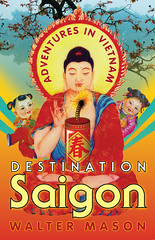
Tonight (June 28) I will be telling some of the stories behind Destination Saigon, showing some lovely pictures and having a whole lot of fun - it would be woderful if you could join me!
I will be introducing some new material, so if you have heard me before, never fear - there will be something novel for you to experience tonight.
This is a free event, starting at 6.30 pm. Details:


Author Talk : Walter Mason @ Leichhardt Library

28 Jun 2012
6:30pm - 8:00pm
28 June - Join Walter - writer, spiritual tourist and a lifelong dilettante - for an evening of conversation and armchair travel. Bookings essential - 9367 9266

 Conversations with...Walter Mason


Come and join Walter, raconteur extraordinaire, for our June author talk at the library. 
Walter's first book, Destination Saigon, offers the reader a taste of the real Vietnam and its people on a sometimes funny, always fascinating journey from the bustling cities to out of the way villages, into Buddhist monasteries and along the Mekong - a real delight for armchair travellers and those contemplating their own adventure.
Destination Saigon was named one of the ten best travel books of 2010 by The Sydney Morning Herald.


Thursday 28 June
6:30pm - 8:00pm 
Leichhardt Library
Bookings essential - 9367 9266
Free event - All welcome
Light refreshments served


Tuesday, June 12, 2012

Thich Quang Duc


Though these days people in the West view him as a figure of bizarre fascination and even horror, Thich Quang Duc remains a hero to Vietnamese Buddhists, and is even called Thich Quang Duc Bo Tat - the Bodhisattva Thich Quang Duc.


He is the monk famous for burning himself alive in protest at the continued Vietnam-American war, and the image of his burning body sitting upright in the lotus position became a worldwide symbol of the anti-war protest movement.
Though he hailed from Hue, Thich Quang Duc was normally resident at Saigon, at the Quan Am Pagoda in Phu Nhuan District.


This temple is still there, on the re-named Thich Quang Duc street, and upstairs it has a small and rarely visited museum to the Bodhisattva. Normally closed to visitors, it contains various relics of Thich Quang Duc - his pillows, his clothes, his books and other everyday items. The temple also has his most sacred relic, the small charred heart that was left after his body had been consumed by petrol-fuelled flames. This heart will be housed in a large tower being constructed at the top of the temple. It may well be finished by now (I'd love to hear from anyone in Saigon who is aware of its progress), and it is already a striking landmark in that part of the district. At the very top of the tower is a large sculpture of two hands clasped together in prayer. It is really quite beautiful.
Though Thich Quang Duc was the first of the Buddhist martyrs, many were to follow, both monastic and lay people.


For many years a small monmument to Thich Quang Duc stood at the corner of Nguyen Dinh Chieu Street and Cach Mang Thang Tam Street in Saigon, but recently a brand new one has been opened by the City authorities just across the road, as part of a memorial park.

Wednesday, June 6, 2012

States of Rebirth

Today I was wandering through the streets of Cabramatta when I spied, in a big pile on a shelf of free Buddhist literature outside a vegetarian supermarket, this laminated leaflet:


It transported me instantly back to Vietnam, where this particular poster is very commonly encountered, particularly in the guest rooms at temples and on the walls of vegetarian restaurants.
It is a chart of the various states of rebirth we might hope to attain.
Now of course, some of those staes of rebirth are in hell, where the wicked must pay for their torments.
This used to be a decorative motif much beloved of Buddhist temples, though it seems to have become unfashionable in recent years, and many temples have painted over their vivid wall murals depicting the various torments of hell.
I found some intact, however, at the Vietnamese Buddhist temple in Phnom Penh.


And while in Siem Reap I visited the truly ghastly Cambodian Culture Village, where the only thing even mildly amusing was the "Tunnel of Judgement" featuring 3D renderings of the punishments infliced on the evil in the hell realms.
These dioramas were a kind of torture porn, and of all the photos I took this is the ony one I can show safely on a PG rated blog:

Related Posts with Thumbnails