Showing posts with label culture. Show all posts

Friday, January 7, 2011

My Guide to Vietnam: Interacting With Buddhist Monks and Nuns

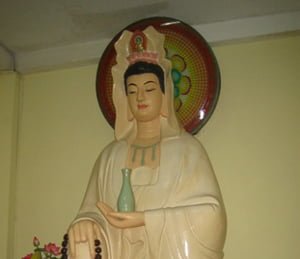
Most visitors to Vietnam will encounter monks and nuns.

Buddhist temples make up a big part of the itinerary for any visitor to Vietnam, and almost all of these places are living, thriving monastic communities.


You will witness monks and nuns wandering about attending to their duties, and for most they remain mysterious, exotic and ever-so-slightly glamorous figures.


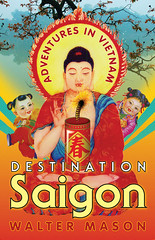
Any reader of Destination Saigon will know that Buddhist monks and nuns are a big part of my world, both in Vietnam and Australia, and have been so for many years.


People often ask me how they should behave in the presence of monastics, so here is a bit of advice.
Whenever you encounter monks or nuns you should greet them in the traditional Buddhist manner, with your hands clasped in the "prayer" position, at the chest.


In Vietnamese this is called chap tay, and it is a lovely tradition that is steeped in symbolic meaning. Thich Nhat Hanh writes about it, comparing the clasped hands to a lotus bud. By placing our hands together at our chest and bowing slightly (no need to over-do it), we are honouring and respecting the other person - Thich Nhat Hanh says the Buddha in me is greeting the Buddha in you, or "a lotus to you, a Buddha-to-be." Monks greet each other in a similar fashion, as do lay-people when they are at temple. In Vietnam the chap tay is reasonably uncomplicated - you simply make the gesture at chest level, no matter who you are or who you are meeting. In other South-East Asian countries it is altogether more tricky, and you have to raise your hands to different levels depending on what you are doing and who you are encountering. I invariably do it wrong. To make matters worse, the conventions are ever-so-slightly different in Thailand, Laos and Cambodia, so that what was ok in one place becomes a gaffe in another.
When Buddhists make the chap tay gesture they also normally say Mo Phat, which is an abbreviated version of the mantra Nam Mo A Di Da Phat, which means "Hail Amitabha Buddha." If you can master these two actions, you will be an instant member of the Buddhist community in Vietnam!
If you see monks or nuns, do smile at them and greet them – most foreigners ignore them - mostly because they they are shy, I suspect, or worried that they may say or do something wrong. Perhaps they are also concerned that a monk is not to be bothered with foolish tourists and everyday gestures. But believe me, they love it when someone is friendly towards them
, especially a foreigner. Monks and nuns in Vietnam are frequently well educated and can sometimes speak good English, so do try to connect.

Of course, there are a couple of simple dos and donts when it comes to interacting with them:

  • Avoid physical contact, especially if they are of the opposite sex.
  • Dress respectfully, especially if they invite you to a special event - this goes for men and women - no shorts and only shirts with sleeves.
  • Be careful of violent acts - most monastics in Vietnam are strict vegetarians, and things like swatting at mosquitoes and squashing ants, which we do instinctively, can actually upset them.
  • Don't visit the temple if you have been drinking.
  • Don't arrange meetings at cafes, hotels, shopping centres or other places of secular entertainment - generally their vows don't allow them to go to such places. You can meet at temples, bookshops and vegetarian restaurants instead.
  • Don't give them tasks or errands, or ask them to pass on messages or gifts. Their vows actually forbid this.
  • Offer them money, by all means, but do it discreetly - always put the money in an envelope. It also helps them if you tell them what the money is for e.g. "This is for you" or "This is for the temple." Generally they are bound to use the money in the way the lay-person intends, so make it easy for them. If they refuse a monetary gift, you can always insist and say it's for the temple, or for charity, in which case they must accept. What do nuns and monks need money for? I hear you ask. Well, books, study-fees, transport, food - most rely entirely on private sponsors just to survive, so your gifts will always be needed. If you ask them what they want, please be clear about the amount you want to spend, as this saves awkward situations. If you are ofering to buy them $30 worth of books, say so, so they will know not to ask for $10,000 for a temple extension. This might seem all very mundane and worldly, but it is, in fact, the kind of thing that local lay-people do in their own interactions with the religious.
  • If you see a monk or nun in a bookstore, offer to pay for their purchase. You can also do this in a vegetarian restaurant. If they are already in the company of lay-people, however, it's probably best not to do this, as they are probably already being looked after, and you don't want to embarrass anyone.
  • Gifts for monastics: apart from cash, you can offer tea (especially imported), live plants (esp. orchids), cut flowers, fruit, books (they love Buddhist books in English), stationery, Buddhist religious images and paraphernalia (especially from other countries), incense (expensive or imported only), candy and cartons of soft-drink or vegetarian packet noodles.

Thursday, May 20, 2010

Social Evils

You still see in Vietnam – though not as often as before – big propaganda posters exhorting people to do this, or refrain from that.
My favourite propaganda campaign happened during the mid-90s, and it was called the Stop the 7 Social Evils campaign. As the campaign gathered steam, more and more social evils were added, until eventually the posters were covered with dozens and dozens of wicked activities rendered in such small print that you could barely read them. Though of course, children would stop in front of them for hours and decipher these descriptions of wickedness.
Among the original 7 evils were prostitution, heroin and homosexuality – which kind of describes an average Saturday night in the big cities of Vietnam.


Big black serpents would be painted spitting venom, and the drops of venom took the shape of words: gambling, motorcycle racing, massage. And bia om. Bia om is a uniquely Vietnamese entertainment, in which men go to a beer garden, purchase a beer and are hugged by the waitresses. Om means to hug. I’m not for a moment pretending it’s as innocent as it sounds. But the fact is that, until the Social Evils campaign spread across the country, many regional areas had never heard of bia om. However, once this particular evil was explained to them they quickly opened such places, and now even the smallest towns in Vietnam can boast of at least one bia om establishment.

Tuesday, April 20, 2010

TRAVEL SATURDAY—write around the world


SATURDAY 24 APRIL 3:00-4:30PM

We all love to travel, exploring different countries and cultures around the globe. But when we can't travel ourselves, the next best thing is to experience travel vicariously through the words and photos of others.

Our first Travel Saturday, Write Around the World will include a panel of writers and journalists talking about travel writing, how to transform observations into works of fact and fiction, and their own areas of interest including spirituality and travel, the 'crisis' in travel writing and the effects of cultural tourism.

Write Around the World is guaranteed to stimulate both your travel bug and your creativity.

Walter Mason is a travel writer, speaker and brilliant raconteur with a special interest in spirituality. His book 'Destination Saigon' gives us a taste of the real Vietname and its people on a sometimes funny journey from the bustling cities to out-of-the-way villages, visiting Buddhist monasteries and travelling along the Mekong. Walter first visited Vietnam in 1994 and has been back 11 times since.

Author and journalist Brendan Shanahan travelled through Turkey's secretive east, where he found himself in the middle of a gunfight and was propositioned by a gang of teenaged boys. Brendan's book 'In Turkey I am Beautiful' has been described as "laugh-out-loud funny" and is an affectionate portrait of a country and a people on the edge.

Erin O'Dwyer is an award-winning Australian journalist, a feature writer for the Sydney Morning Herald and a UTS lecturer. Erin examines our search for an authentic cultural experience and the impact that has on fragile cultural destinations. Erin poses the question: "Are we killing the very cultures we travel to see? How can we travel in a way that is not only environmentally sustainable, but culturally sustainable?"


Free Event—Everyone Welcome
No booking required

@ Sydney Mechanics' School of Arts
280 Pitt Street
Sydney NSW 2000
Ph: 02 9262-7300

Thursday, March 25, 2010

Lu Dongbin


This pic was taken at my friend's Taoist Feng Shui Fortune Telling business on the West Lake in Hanoi - a place that I talk about in my book, Destination Saigon. It is a statue of Lu Dongbin - a figure I didn't know much about until I encountered him in my friend's shop.
It seems that Lu Dongbin is something of a Patron Saint to practitioners of the Taoist arts.
He is also one of the most commonly appearing deities in the world of Chinese folk religion, though he is almost completely unknown to non-Chinese. It seems that in the early part of the 20th Century the cult of Lu Dongbin was particularly popular in Southern China, which explains his presence in so many temples in Hong Kong, and among the Chinese diaspora abroad.
Interestingly, a fable about Lu Dongbin is retold in Liao Fan's Four Lessons - one of my favourite books:

"Lu Dongbin was being taught the art of transforming iron into gold. They would use this gold to help the poor. Dongbin asked his teacher,"Will the gold ever change back to iron?" Li Jung answered, "After five hundred years, it will return to its original form." Dongbin said, "In that case, I do not want to learn this art for it will harm those who possess the gold five hundred years from now." Li Zhong said, "To become an immortal, one must complete three thousand virtuous deeds. What you have just said came from a truly kind heart. Your three thousand deeds are fulfilled.""

Sunday, March 21, 2010

What shoes to take to Vietnam


Sometimes I think it's the really small details, the truly mundane, that you forget to ask about before you go to visit a foreign country. You'll spend months researching the religion, the culture and the history of your intended destination, but you'll forget to find out what people eat for breakfast, or is toilet paper readily available, or can you buy Mentos at short notice. And, ironically, it is these little things that can make a real difference to how you travel and the quality of your trip.
So I see myself as something of a shoe ambassador. Shoes are an important consideration in Vietnam.
Now, it's obvious that when you go on holiday you're going to be doing a lot of walking, and so you will need a pair of shoes that will facilitate that. Most Western travellers tend to plump for desert boots or fancy lace-up sports shoes when they travel. But both of these are a disaster in Vietnam.
Because, as in most countries in Asia, the Vietnamese are sticklers for the removal of footwear, often in the most unexpected places. I mean, it's obvious that you are going to have remove your shoes when you visit a temple or sacred shrine. But do you know that if (God forbid) you have to visit the dentist in Vietnam you will be required to remove your shoes?
So those expensive walking shoes you thought were just perfect for foot slogging will soon become a curse as you find yourself hunched over for the thriteenth time that day lacing them up at some doorway or other.
When I go to Vietnam I only pack two types of footwear. Some comfortable leather casuals that slip on and off easily. Skechers or Hush Puppies are perfect, as they can be streetwear, walking shoes or going out shoes. And I also carry a pair of casual leather flip-flops for when I am hanging out - they are cool (i.e. not hot), and flip-flops are what about 95% of Vietnamese wear. If you buy nice ones, you can wear them almost everywhere. Because you almost always leave your shoes at the door, you can even team them with quite a dressy outfit.
Am I sounding like Carson Kressley?

Monday, March 1, 2010

Our Lady of La Vang


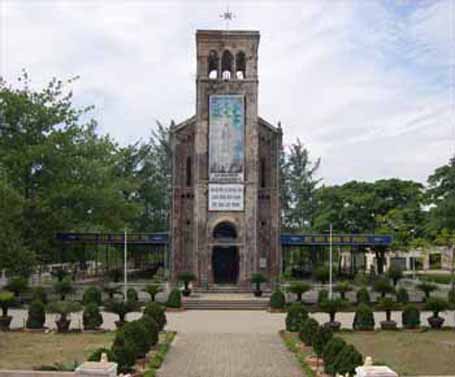
The manifestations of the feminine divine in Vietnam are of special interest to me, and in Destination Saigon I discuss my rather disappointing visit to La Vang in the Central Vietnamese province of Quang Tri.
Our Lady of La Vang is a common figure of worship in Catholic churches and homes everywhere in Ho Chi Minh City, and her statues are frequently beautfully rendered in white marble. This apparition of the Virgin is entirely (and appropriately) Vietnamese, dressed in ao dai, and clutching a Vietnamese Christ Child.
The apparitions of the Virgin at La Vang occured in the 18th century when Catholics in Vietnam experienced religious oppression at the hands of the ruling family.
These days overseas Vietnamese Catholic communities make a special cult of Our Lady of La Vang, and supernatural events are said to have occured at a shrine to her in Inala,Brisbane.
It must be said, however, that La Vang itself is a rather lacklustre spot - the day I was there it was quite deserted, and the grounds and gardens at the shrine, as well as the old church buildings, were poorly kept. It interests me that the Church hasn't seen fit to pay more attention - and spend more money - on such a significant site. Certainly its tourist potential is currently well under-developed. I couldn't even buy a statue of Our Lady at the site, and you all know how much I love statues.
To my mind the nicest shrine to Our Lady of La Vang stands at the Ba Chuong church on Le Van Sy St, in Phu Nhuan, Ho Chi Minh City. In fact, the whole church is extraordinary and quite beautiful, and well worth visiting.

Saturday, February 27, 2010

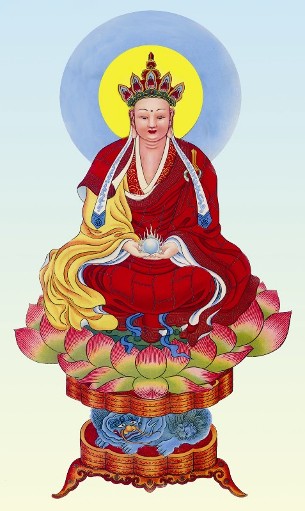
Dia Tang Vuong Bo Tat


Dia Tang is the Vietnamese name for an important Mahayana Buddhist Bodhisattva known more commonly in the West by his Japanese name, Jizo.

Dia Tang is a central figure of worship because he is the protector of the dead, and is the Bodhisattva people appeal to for information about their loved ones who have passed on. In the main hall of most temples, he is the figure to the left of the main shrine, and is distinguished by his crown-like hat and the pilgrim's staff he is usually holding. He is also normally the central object of worship in the Hall of the Dead, that part of the temple where people's ashes are normally kept in porcelain urns.

So while he is an important part of religious life (the memorialising of the dead is one of the central religious duties of all Vietnamese people) I wouldn't suggest he was a "popular" figure. You never encounter busy shrines to him that have been erected by lay-people in the way they are for Kwan Yin, for example. And he is rarely to be found as a statue in people's homes. I think the associations of death that surround him are simply too strong for people to feel comfortable in his presence.

You do encounter him, however, in graveyards (and there is an enormous graveyard on the outskirts of Ho Chi Minh City), often in large and expensive statues that have been erected on top of graves. I have wanted to go to the Ho Chi Minh City cemetery and photograph it for many years, but my Vietnamese friends refuse - they think it is too spooky, and too disrespectful to the dead.

In Japan, of course, the figure of Dia Tang (or Jizo), while still considered the special protector of the dead, is an altogether more popular figure, and is frequently represented as an adorable baby monk. The complicated reasons for this are set out in Jan Chozen Bays' fascinating book Jizo Bodhisattva - an essential read for anyone interested in Buddhism.

This photograph was taken in a monk's cell in Quy Nhon. The pink porcelain Dia Tang in the foreground is new and is an import from China. Obscured behind him is a much older Vietnamese plaster statue of the Bodhisattva in a glass case.
Related Posts with Thumbnails