Saturday, December 12, 2020

Fri 12 Feb - Fri 26 Feb 2021 - Walter Mason teaches a 3-week course on The Great Hollywood Costume Designers, at WEA Sydney

The Great Hollywood Costume Designers


Fri 12 Feb - Fri 26 Feb 2021 

     
11am - 1pm each Friday, 3 sessions, 6 hours total
 

At WEA Sydney


Join Walter Mason, author of Destination Saigon, as we look at three of the best Hollywood Costume Designers of the Golden Years: Edith Head, Adrian and Jean Louis

We will look at their films, at their creations and how their looks have continued to echo down through the years.


There are still COVID restrictions on the number of students allowed in this face-to-face course, and we are very close to selling out, so if you think it sounds fun do book your place now! 

Friday, January 4, 2019

St Martin de Porres - a beloved saint in Vietnam


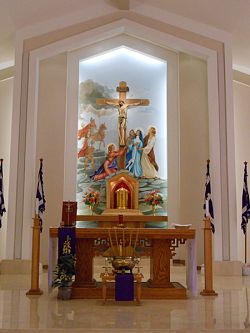
Image of St. Martin de Porres inside a small neighbourhood Catholic church in Tan Binh District, Ho Chi Minh City


If you start visiting the Catholic churches in and around Ho Chi Minh City you will begin to notice an unexpected saint. St Martin de Porres, native of Lima, Peru, is one of the most beloved saints of the Saigonese Catholics, and his image pops up everywhere.

Now, given Vietnam's French colonial past you might expect to see French saints better represented. People like St. Catherine Laboure (hardly found at all) or Bernadette of Lourdes (seen in churches occasionally). But no - apart from the Vietnamese martyrs and Our Lady of La Vang, the most commonly encountered figure is from the Hispanic world: St. Martin de Porres.

Well, one reason for it might be that Spanish missionaries got to Vietnam well before French ones. They established missions in the North of Vietnam that were never particularly successful. It was the French Jesuits, especially in the wake of Alexandre de Rhodes, who would make the greatest religious impact on the country.

But the real reason for the popularity of the levitating, biracial Peruvian saint is much more recent. By the 20th century St. Martin de Porres had come to be an important figure in the post-colonial Church. His in-between status had seen his popularity grow beyond Latin America. By the 1960s he was revered in the Philippines, and was seen as representing the spirit of the Church outside of the Western world.

It was Filipino missionaries and young Vietnamese priests trained in the Philippines who really ramped up the devotion to St. Martin de Porres, installing images of him in churches around the war-torn city of Saigon. He seems to have struck a nerve with Vietnamese worshippers as well, and soon his cult, which is still well and truly alive today in Vietnam, was well established among Catholics in the South.

Probably the most famous shrine to Thanh Martino (as he is known in Vietnam) is quite close to my house in Phu Nhuan district. The famous Nha Tho Ba Chuong is a large and beautiful church in a Vietnamese architectural style on the impossibly busy Le Van Sy street. It is well worth a visit to see its funky 60s Vietnam style and, of course, say a prayer at its famous shrine to St. Martin de Porres. You can also buy a statue or image of St. Martin at the gift shop outside (that is where mine comes from).


The shrine to St. Martin de Porres at Nha Tho Ba Chuong, Phu Nhuan District, Ho Chi Minh City


The church is always open (though the gift shop closes for the lunchtime siesta between 12 and 2, making of one of the last places in the City to keep these once-ubiquitous hours) and the image of the Saint was sent from the Philippines in the early 60s and has since became a focus of many prayers and miracles.


Statue of St. Martin de Porres outside Nha Tho Ba Chuong, Phu Nhuan District, Ho Chi Minh City


There is also a small but often-visited shrine to him at the colourful Tan Dinh church in District 3, but in recent years this church has closed itself off to visitors (why on earth they would do such a thing I have no idea) and you will probably be shooed away if you try to get inside to say a prayer.

Who was St. Martin de Porres? (1579 - 1639)

A Dominican lay-brother of mixed race, St. Martin de Porres exhibited a sophisticated and profound spirituality from an early age. He was the illegitimate child of a Spanish colonial, and his outsider status is an essential part of his story, and of his popularity across the Church in this modern age.

As a young servant he would beg his employer for candle stubs so that he could spend his nights in rapturous prayer and devotion to the Blessed Virgin Mary

He was famous for his saintliness, and once let a beggar covered in ulcers to sleep in his own bed so that he might find some comfort.

He is something of an all-purpose Saint, and people pray to him for all kinds of reasons, but particularly for help in times of financial distress and to help the poor in all parts of the world.

He is the patron saint of people of mixed race, and of innkeepers, barbers, public health workers and more, with a feast day on November 3.

The Special Prayer to St. Martin de Porres reads: 

Most humble Martin de Porres, whose burning charity embraced not only thy needy brethren, but also the very animals of the field, splendid example of charity, we hail and invoke thee!  

From that high throne which thou dost occupy, deign to listen to the supplications of thy needy brethren that, by imitating thy virtues, we may live contented in that state in which God has placed us, and, carrying our cross with strength and courage, we may follow in the footsteps of our Blessed Redeemer and His most afflicted Mother, to reach at last the Kingdom of Heaven through the merits of our Lord Jesus Christ.  

Amen.


-------------------


 Walter Mason is leading a tour to Vietnam in April 2019. With a special focus on writing and creativity, this tour is a precious opportunity for writers to see a country with a fellow writer who is passionate about the place and whose enthusiastic love for Vietnamese culture, literature, cuisine and life is unbounded.

More details about the Better Read Literary Tours Vietnam tour with Walter Mason


Monday, May 28, 2018

Walter Mason will talk on Martin Chuzzlewit and the lure of America at the NSW Dickens Society on Saturday June 2, 2018


Walter is the Vice-President of the NSW Dickens Society, a professional speaker, author and tour guide. Dickens’ final exploration of the picaresque form in The Life and Adventures of Martin Chuzzlewit has always been one of his least-discussed books, but in this talk, Walter Mason makes the case for it being one of his best. Dickens made a decision to switch the scene to America partway through the novel, and Walter also looks at Dickens’ relationship to America and the ways in which it was portrayed by his peers in English literature.


This talk is hosted by the NSW Dickens Society.
Non-members are always welcome.
Entry for non-members is $10.
Meetings are held at 10.30 at the Sydney Room, City Tattersalls Club, 194 – 204 Pitt Street (near Market Street), Sydney. No bookings required. $5 entry fee for NSW Dickens Society members. $10 for non-members.

Saturday, March 31, 2018

Walter Mason will talk on The Zen of Jane at the Jane Austen Society of Australia in Sydney, Saturday June 16, 2018


“Zen of Jane” talk at Jane Austen Society of Australia  - Sydney  – 16 June, 2018 

Sydney meetings are held at the Uniting Church Hall, 7 Lord Street, Roseville NSW

They start at 2pm, and it's a good idea to get there a little early because they can fill up.

“The Zen of Jane: Buddhist Lessons from the Books of Jane Austen” - Walter Mason

A novel and enlightening look at Jane Austen as Zen master. How do we look at literature through new filters, and what does a nineteenth century writer who probably never thought about Buddhism have to teach us about matters of mindfulness? Walter Mason, author and spiritual tourist, looks at how far Buddhist thought had entered Austen’s era and how reading her might prove thoughtful lessons in wisdom, quietness and loving kindness. 
 
When: Sat June 16 2:00 PM - 4:00 PM
 
My talk only goes for about an hour, but there are other items on the program, and a delicious afternoon tea. 
 
 
Non-members are always welcome!!!

Wednesday, January 3, 2018

Thang Ngo — Blogging Your Interests Tuesday, 13 February 2018, 12:30pm at the Sydney Mechanics' School of Arts - FREE!


My own wonderful life partner Thang Ngo is giving a talk at the Sydney Mechanics' School of Arts in February that should interest all who want to document their travels.


Thang Ngo — Blogging Your Interests


We all have something we’re passionate about. Our interests can be as diverse as politics, food, fashion, music, gardening and more.

Blogging is a way of sharing your passion with the world and engaging with others who share your interests.

Well-known food blogger Thang Ngo will reveal how to use your passion to build an engaged community through blogging.

Learn tips, tricks and tactics for starting a successful blog and finding your niche, in addition to strategies for maintaining your motivation and building readership. Find out how blogging helps your career by developing your understanding of digital writing and social media.
FREE — Everyone Welcome

No Bookings Required


About Thang Ngo

Thang started blogging over 17 years ago as a local government Councillor in Fairfield to engage with constituents. In 2009, he started a food blog to celebrate the rich and flavoursome food of migrant eateries in his neighbourhood. Today, Noodlies is one of Australia’s most popular food blogs and is credited with helping fuel the popularity of Asian street food, such as Vietnamese pork rolls.
https://noodlies.com/

Monday, December 4, 2017

Come hear Walter Mason chat with the fascinating psychic and author Debbie Malone, Thursday December 7, 6.30pm


Please help me spread the word! 

This Thursday the 7th of December, I am at Ashfield Library chatting with the fascinating Sydney psychic author Debbie Malone.

Psychic and author Debbie Malone


I have known Debbie for many years, and have always been impressed with her down-to-earth spirit and her sincerity and unpretentiousness. Debbie is everything an Aussie psychic should be.

Debbie has recently written a book about the crime cases she has volunteered to work on in the capacity of psychic detective (it's a fantastic book which I gave a rave review to in New Dawn magazine). We'll be talking about this really interesting work, as well as getting down to some of the nuts and bolts about psychic development, as well as her work with angels which has inspired her exquisite oracle cards.


So if you are at all inquisitive about matters esoteric, do come along! I would love the support, and the more people who come to events like these the more libraries will be encouraged to hold them in the future.

What's more, it's totally free - you just have to show up. Though the library would love it if you could book in advance at this link on Eventbrite.


So:

Dec. 07, 2017, 6.30pm
 
Ashfield Library - Free, but bookings essential

Wednesday, July 12, 2017

The Mindful Writer on again at NSW Writers' Centre in 2017

My course on Mindful Writing is always popular, and it's on again this year for the first time at the NSW Writers' Centre.

Places are still available, but it would act pretty quickly, because it tends to book out.

It is an amazing time of quietness, reflection and creative growth, over the course of four Tuesday evenings in the beautiful and atmospheric setting of the NSW Writers' Centre in Callan Park.

Full details and online booking.

Hope to see you there.


Friday, June 10, 2016

Walter Mason lectures on Charles Dickens' final novel "The Mystery of Edwin Drood"

On Saturday June 11, 2016, I am proud to be lecturing to the NSW Dickens Society on Charles Dickens' final, unfinished, novel The Mystery of Edwin Drood.

It has been such a delight reading this book closely and researching it, and I am excited to present some wonderful stories about Dickens at the lecture. Keep your ears out for opium, mysterious goings-on in church crypts and the lingering effects of mesmerism. I even cover Dickens' activities from beyond the grave!

NSW Dickens Society Meetings are always open to all, and the cost for guests is only $10 - money well spent that helps keep this precious literary society alive.

Details:

Edwin Drood and the Death of Dickens - a talk by Walter Mason at the NSW Dickens Society.


John Everrett Millais' sketch of Charles Dickens shortly after his death in 1870


Saturday 11th of June at the Castlereagh Boutique Hotel, 1st Floor

169 Castlereagh St

Sydney (about 5 minutes walk from Town Hall Station).

10.30am start

Entry fee for guests (all welcome) $10 
 

Wednesday, February 17, 2016

Tinh Xa Trung Tam, Binh Thanh District, Ho Chi Minh City


Tinh Xa Trung Tam has a special place in my heart because it is the first temple in Vietnam that I ever had any real connection with. In the mid-90s I was a student of a monk in Australia who was a part of the order, and so I visited Vietnam with the special intention of studying more here and learning about this distinctive form of Vietnamese Buddhism.


Master Minh Dang Quang

Tinh Xa Trung Tam is one of the centres of worship for the Tang Gia Khat Si, an indigenous Buddhist order founded by Master Minh Dang Quang. There is an excellent Wikipedia entry for this temple which explains its history and a little about the Order and its founder (I would actually love to hear from whoever wrote it) which you should read.

I have spent many days in this temple and its surrounds, though these days when I go back to Vietnam I probably only visit once or twice to say a prayer and soak in some of the memories of my youth.

I am still quite fascinated by the Order's founder, a Mekong Delta monk called Minh Dang Quang who attempted to unify the Theravada and Mahayana schools of Buddhism and re-write the scriptures in colloquial Vietnamese. As at every Tinh Xa (the Vietnamese version of "Vihara" which is what the Tang Gia Khat Si temples are called, as opposed to the Mahayana temples which are called Chua in Vietnamese), there is a shrine to the Master, and this one also contains some of his relics.


Shrine to Master Minh Dang Quang, his relics in cabinet below

On a weekday afternoon there is rarely anyone inside the main shrine, and it is a great place to sit quietly and meditate, or to do a round or two of quiet recitation of the Buddha's name.

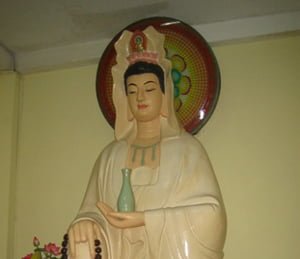
Outside there is a famous, and enormous, statue of Kuan Yin, the Bodhisattva of Mercy (Quan The Am in Vietnamese). It is a very popular object of worship, and throughout the day people come into the monastery grounds to make their own prayers at its base.


Statue of Quan The Am, Bodhisattva of mercy

The temple was built in the 60s, and visiting recently with an architect I was informed that it was a classic piece of American-era architecture, especially in its liberal use of pebble-crete. The main hall is built in the octagonal shape of all Tinh Xas, symbolising the Noble Eightfold Path of the Buddha. Over the years the surrounding buildings have been demolished and rebuilt, and I fear that the same fate awaits the main hall, which would be a shame.

Tinh Xa Trung Tam in Binh Thanh claims to be the main temple of the order, but it's worth mentioning that the order did break up into different sects in the 60s and there are a couple of other Tinh Xas around that claim to be Trung Tam (The Central). 

Just outside the main gates of the temple is a little bookshop, and a small gift stall next to it. The bookshop is run by the loveliest man, though sadly there are no books in English. If you have any Buddhist friends in Vietnam, though, or plan to make some, this is a great place to buy gifts. Publishing in Vietnam is vibrant, and books are beautifully designed and cheap. I always buy a bag-full and manage to distribute them easily.

You can find the temple at:

7 Nguyễn Trung Trực Street, Bình Thạnh District, Ho Chi Minh City.

It is about a 25 minute taxi ride from downtown Saigon (outside of peak hours) and is well worth a visit.
It is hidden down several lanes, so be prepared for your driver to stop and ask for directions along the way.

 In October/November this year I am once again leading a tour of Vietnam, from Hanoi all the way down to the Mekong Delta. This will be a fantastic journey, and I'd love to have you along.

Sunday, February 14, 2016

Vietnam Books - Something to Read Before You Go

If you're anything like me, reading books about a place is one of the most pleasurable parts of preparing for a holiday abroad. Here is my reading list for Vietnam:


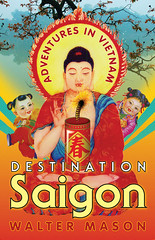
Walter Mason's Destination Saigon - Ok, ok, so I wrote it. But honestly, if you want an intimate view of contemporary Vietnamese religion, culture and sexual mores, and a bit of a giggle, then this is where you should start. So many books about Vietnam are about the war or about colonial history. I set about writing a book that was telling stories of Vietnam now, and I really think I succeeded!


Andrew X Pham's Catfish and Mandala - Quite a superbly written book that is about so much more than Vietnam, this is a unique and compulsive read that offers a great deal of insight into what it's like to be an overseas Vietnamese returning home as a stranger. Books about Vietnam are normally told from the perspective of a foreigner, or are translated works by people living in Vietnam.


Gontran de Poncins' From a Chinese City - A French Count goes to spend a few months in Cholon, Saigon's Chinatown, in the 1950s. This is such a gorgeous book, and absolutely fascinating. There are very few books on Vietnam that deal with the Chinese community in any detail, so this is a real rarity.


Norman Lewis' A Dragon Apparent - More Indochina in the 50s, Lewis' quiet British fortitude makes him an excellent observer, and his love of the Vietnamese comes seeping through. Vietnam travel books are surprisingly rare, and really good ones rarer still. Lewis' is the best.


Graham Greene's The Quiet American - Yeah, yeah, I know it's on every list, but really it is quite perfect, and you can still visit most of the places he mentions in the book. If you're going to Vietnam, do make sure you read this book first.


Marguerite Duras' The Lover - Especially if you are planning on having an affair with a Vietnamese guy (though the lover is actually Chinese). Sensuous, historically fascinating and quite dazzlingly accurate. Not really full of Vietnam tips, but it creates the most wonderful mood and evokes an incredible era that is only now beginning to be romanticised and even celebrated in Vietnam.


Thich Nhat Hanh's Zen Keys - A unique insight into Vietnamese Buddhist monasticism. As well as information about the philosophy of Buddhism, it provides a great story to read about the life of a young monk, and how they were once expected to behave inside the Chua (Pagoda).


Kien Nguyen's The Unwanted - Absolutely the best account of what Vietnam was like in the years immediately following the end of the war. This book is a masterpiece and deserves to be better known. Don't wait to buy this one - it is one of the really good Vietnam books, and one of the most unique perspectives.


Duy Long Nguyen's The Dragon's Journey - A memoir about a Vietnamese refugee's journey to Australia, where he becomes a famous healer. A book about Vietnam and about the journey of the Vietnamese dispora.


Stanley Karnow's Vietnam: A History - Pretty solid going, but once you've finished it you will be entirely informed about the complex and long-lasting Vietnam war.


Ma Van Khang's Against the Flood - A little-known but fascinating fictional peek into the ghastly bureaucracy and stifling conservatism of Vietnamese life in the 80s and 90s.

Wednesday, December 23, 2015

Walter Mason lectures on Bhutan, April 8, 2016, 1pm - Ashfield Library


In August 2015 I was lucky enough to travel to Bhutan, one of the most beautiful and fascinating places on Earth.

Do join me at Ashfield Library on Friday April 8, 2016 for a lecture on Bhutan's culture, history and religion, accompanied with amazing photographs I took while I was there.

This is a free event, and all are welcome - do mark your diaries.

Details:

Friday April 8, 1pm - Level 6 Council Chambers, Ashfield Library

Walter Mason will give an illustrated lecture Om Mani Padme Hum and the Dragon Kingdom of Bhutan.

This is a Seniors Week event.


Thursday, January 29, 2015

Walter Mason illustrated lecture on Graham Greene's Vietnam


I'll be at Ashfield Library on Saturday February 7, 2015 from 11am - 12pm in the Local Studies Room (just off the main library floor), Level 2, Civic Centre talking about Graham Greene, Vietnam and The Quiet American and I would love to see you there.

I have been obsessed with Greene's short and perfect novel about Vietnam ever since I first read it when I visited Vietnam at the age of 24.

My interest in The Quiet American, and Greene the writer, has only grown over the years.

I am delighted to be able to show you some of Greene's novel and where and how it is reflected in Vietnam in the 21st Century.

Do join me at this free talk illustrated with my own photos and reflections.

I can promise you an engaging and entertaining hour.

Thursday, October 23, 2014

Always in threes: the significance of 3 in Buddhism

"Different schools of Buddhism all have different devotional practices to the Buddha, although all  Buddhists make symbolic offerings to the Three Jewels, that is, the Buddha (teacher), Dharma (teachings), and Sangha (community)."

Andi Young "The Sacred Art of Bowing"


Recently I was teaching a course on Vietnamese history, and naturally enough Buddhism was a part of the discussion. While discussing a ritual, one of the students asked me: "Why is everything always done in threes in Buddhism?"
I realised then that I had a lot to explain, and I thought I would do so on this blog.


When one bows at a Buddhist shrine, one always makes three prostrations. At the same time one offers three sticks of incense. When you make a ceremonial procession around a temple or tomb you do so three times.

3 sticks of incense offered at a buddhist shrine in Binh Dinh, Vietnam


This number is not arbitrary. Buddhists instantly understand that the number 3 represents the Three Jewels (the Triratna) that make up Buddhism. These are:

Sakyamuni Buddha


1. The Buddha: The person of the historical Buddha Sakyamuni.

2. The Dharma: The body of teachings that describe Buddhist doctrine and belief.

3. The Sangha: The group of people who follow the Buddha and his teachings. This was traditionally interpreted as the ordained celibate clergy who serve the Buddha exclusively, but most modern Buddhists extend the meaning to incorporate the communities of lay-people who follow the Buddhist path.

And so each time we bow, and each time we place a a stick of incense in the burner, we are recalling one of these "Jewels," these essential elements of the Buddhism. 

Monday, April 28, 2014

Quan Am Pagoda, Phu Nhuan


One of the places I find myself constantly recommending people visit is the little-known Quan Am Pagoda in Phu Nhuan District, Ho Chi Minh City.


This temple is also mentioned in my book, Destination Saigon, and I have been visiting there for almost 15 years now.


It is a pretty basic suburban temple, but it was the Saigon residence of Thich Quang Duc, and as I mentioned in a previous post, it has become something of a shrine to him.
Downstairs is a large shrine to Thich Quang Duc Bodhisattva and the other Buddhist martyrs that followed him - most people don't realise that many people, both monastic and lay, followed his example and set fire to themselves in protest to the war.


There is also a large and very kitsch grotto housing a quite unique shrine to Quan Am (Kwan Yin). This particular shrine is very popular with locals, and the statue of Quan Am is quite unique, in a form rarely seen.


To get to the grotto you need to walk through the gift shop to the left of the temple, and then climb up through the fake cave. Offerings are made from behind the statue. This grotto is exceedingly cramped, and should you meet someone on your way up or down one of you is going have to re-trace your steps - it is almost impossible to pass another person.

Details: Chua Quan Am - Phu Nhuan, 90 Thích Quảng Đức St, Phu Nhuan, Ho Chi Minh City

Monday, December 23, 2013

Vinh Nghiem Temple, Cabramatta

Vinh Nghiem Temple is one of the Buddhist temples most easily accessible via public transport in Cabramatta.


Now anyone who knows Vinh Nghiem Temple in Vietnam might feel a little let down by the distinctly more humble aspect of Sydney's branch.


Vinh Nghiem in Ho Chi Minh City is Vietnam's largest and most vibrant Buddhist institution, a constant on any tourist itinerary. In Sydney it is a humble fibro cottage with an add-on out the back.


But rest assured it is the real McCoy - the Abbot, Ven. Thich Vien Chon, hails from Vinh Nghiem TPHCM, and was in his day a famous teacher at the Vinh Nghiem Buddhist High School (now closed).
We had a lovely time making our own fresh spring rolls (goi cuon) under the tutelage of Vinh Nghiem Temple's resident nuns.


Details:

Vinh Nghiem Temple
177 John Street, CABRAMATTA, NSW 2166

Open every day - all welcome - enter through the carport on the left side of the house.

Thursday, November 28, 2013

Vietnam on the WWW - a roundup

Tonight I am joining a diverse bunch of writers at the NSW Writers' Centre to discuss Vietnam and writing about it. In preparation I thought I'd offer up some of the latest news from the web:


Painting by Vietnamese artist ViVi Vo Hung Kiet in Salt Lake City


Wednesday, March 27, 2013

Van Duc Temple, Thu Duc, Ho Chi Minh City - Places to Visit in Vietnam


If you are planning a holiday to Vietnam then you should definitely put aside a morning or afternoon while you are in Ho Chi Minh City in order to visit Thu Duc. Thu Duc is a fascinating place.
It is a vast geographic area, almost a city in itself, though it is classified as one of the districts of Ho Chi Minh City. It has always been something of a poor cousin, home to slums and sub-standard housing, though in recent years this seems to be changing, and Thu Duc's proximity to central Saigon (it's just across the river) is seeing it become increasingly prosperous.
One of the places I use as a gauge of that prosperity is Van Duc Temple.


I first visited the temple in the late 90s and it was a very humble affair indeed, despite being the home of the then most senior Buddhist master in Vietnam, The Most Venerable Thich Tri Tinh. It was dusty and a little ramshackle, having been originally constructed in 1954. The large and quite unique satue of Kwan Yin (Quan The Am, the Buddhist Bodhisattva of Mercy) was already in place, but she was installed on quite a shoddy and tacky little stand in the middle of a sad and muddy pond.
Van Duc has undergone quite a renovation.


The same statue is now housed in a solid and ornate construction, and the temple's main prayer hall is cavernous, with incredibly high ceilings and the capacity to seat hundreds of worshippers.


There is a large monastic community, and the surrounding area is home to many different Buddhist temples, as well as a Benedictine monastery of some note.


If you keep walking down the Tinh Lo 43 (the name of the road the temple is on) and turn down the first No. 7 Road (there are actually two No. 7 Roads, one after the other) you will see a collection of 7 or 8 tiny temples crammed onto a single country laneway. I have no idea why this is, but there is obviously some historic reason for it.

Details:

Van Duc Temple (Chua Van Duc)
502 Tinh Lo 43
Khu Pho 5
P. Tam Phu
Q. Thu Duc
Ho Chi Minh City

The temple is about a 20 minute taxi ride from downtown Saigon.
It might be best to get the taxi to wait for you while you explore, as there aren't many taxis in this area.


Monday, January 7, 2013

Monday Blogcrawl - Buddhism

Some Buddhist stuff from around the www this past week:


Stories of the Buddha in art


Related Posts with Thumbnails